

When Caregivers Become the Hidden Patients

Within the healthcare system, one figure is almost always present yet rarely addressed directly: the family caregiver. The one who accompanies the patient through treatments, tests, sleepless nights—while simultaneously holding together the household, the family, and often a professional career. At the hospital, they attend every appointment, yet their exhaustion, distress, and the personal cost they bear remain largely invisible.
At the hematology division of the Davidoff Center for Cancer Care and Research at Rabin Medical Center, this invisibility is no longer accepted as inevitable. A deliberate decision has been made: to consider the family caregiver not as a peripheral companion, but as an integral component of the treatment process. When caregivers are supported, patients are more likely to endure treatment, recover, and regain stability.
This approach is led by Professor Pia Raanani, a leading figure in Israeli hematology. A physician for nearly forty years, founder of the hospital’s hemato-oncology unit at the Davidoff Center, and head of the division since 2013, she acknowledges that she once shared the system’s blind spot.
“A simple phone call with the wife of a patient in follow-up care opened my eyes. I realized how focused we were on the patient, without seeing the person standing behind him,” says Professor Raanani.
In Israel, an estimated 1.5 million individuals serve as family caregivers. The healthcare system tends to view them primarily as facilitators: they transport the patient, complete paperwork, coordinate appointments. Rarely does anyone examine the physical, psychological, and social toll of this role. This reality has intensified with the shift toward increasingly home-based care: oral treatments, telemonitoring, virtual consultations, and home-based palliative care. “The home is becoming the true site of care,” Professor Raanani explains.
“That places immense responsibility on the person present day after day. When the caregiver collapses, treatment adherence and therapeutic response are immediately affected.”
Based on this understanding, Professor Raanani initiated an unprecedented structural change. In collaboration with Caregivers Israel, founded by Rachel Ladany in 2014, the hematology division implemented a pioneering model.

Concretely, the family caregiver is now formally identified in the patient’s electronic medical record through a dedicated tab. “It may sound technical, but conceptually it is a revolution: the spouse, the son, or the daughter now exists within the system—not only the patient,” Professor Raanani emphasizes.
For years, family meetings have also been organized at key stages of the care journey: moments of tension, complex decisions, end-of-life discussions. These meetings align expectations, alleviate emotional burdens, and create space for what cannot always be expressed in front of the patient.
In November 2023, an additional milestone was reached with the launch of a dedicated caregiver support group within the division. Operating on an ongoing basis, it welcomes participants at different stages of the illness trajectory. The group is led by Orit Horn, a social worker at the Davidoff Center.
“We operate from the premise that the family is a complete system—affected by the illness and influencing how it is experienced. Treating only the patient is insufficient. Supporting the caregiver helps create a more balanced and resilient unit.”
This resilience is not merely emotional. Scientific data are concerning: caregivers show higher rates of chronic illness and mortality. Studies conducted among relatives of patients with Alzheimer’s disease indicate accelerated shortening of biological markers associated with life expectancy. “Caregivers neglect their own health, postpone medical checkups, and forget themselves,” Professor Raanani notes.
One encounter with a young couple marked a turning point. The hospitalized patient was accompanied by his visibly exhausted wife. Years earlier, they had faced their daughter’s leukemia together. This time, confronted with the husband’s illness, the wife carried the burden alone. “In a single sentence, the entire dynamic became clear,” the professor recalls.
At Rabin Medical Center, it became evident that caregiver support needed to be prescribed like a medical treatment.
“When we speak of a medical prescription, we move from the ‘desirable’ to the ‘essential.’ A recognized caregiver is a true partner. This translates into fewer unnecessary hospitalizations, earlier discharges, and better treatment adherence. It benefits the patient, the system, and the person standing beside them,” she states.
Mali Rubinstein, the hematology division’s coordinating nurse and a couples therapist, witnesses the tangible impact daily. “The family caregiver is a central partner in care.
The support they receive is crucial in preventing long-term burnout and directly influences quality of care and patient adherence. Sometimes, a simple question—‘How are you today?’—is enough to move someone deeply. Many say it is the first time anyone has truly seen them. Supporting caregivers is not an add-on. It is a necessity.”
In January, a new support group was launched in an enhanced ten-session format. At the first meeting, Professor Raanani read a poem by Emily Dickinson, Hope is the Thing with Feathers, which likens hope to a bird nestled in the human soul, continuing to sing even in the fiercest winds. A powerful symbol for women and men who often move forward without safety nets, sustained only by love and duty.

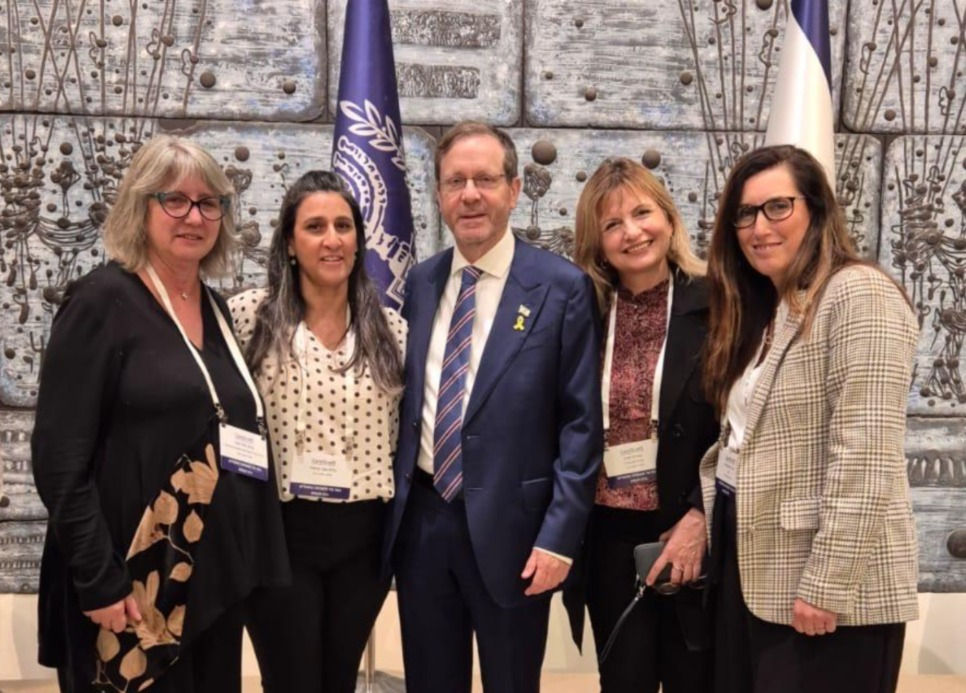
The initiative now extends beyond hospital walls. The model developed at the Davidoff Center has drawn national attention and has been presented at the Knesset and at the residence of Isaac Herzog, under the auspices of Caregivers Israel.
“This recognition allows the issue to enter broader public debate and clearly signals that there is a systemic blind spot that must be corrected,” Professor Raanani underscores.
The next phase is already under consideration. “Our ambition is to expand this model across all hospital departments and to develop research examining biological markers among caregivers of cancer patients,” she explains.
At the Davidoff Center, the family caregiver is now fully integrated into the continuum of care—within the hospital, at home, and in daily life
Caroline Haïat


Comments