

In Jerusalem, Makeshift Clinics for Evacuees from Bet Shemesh
- Caroline Haïat

- Mar 19
- 2 min read

Following the missile strike that struck the city of Bet Shemesh, claiming the lives of nine residents and forcing hundreds of families to leave their homes, the lives of many civilians were turned upside down within hours. Relocated to hotels in Jerusalem, evacuees now face a double ordeal: the trauma of the attack and the harsh reality of displacement.
Yet at the heart of this crisis, a rapid and remarkable mobilization of Israel’s healthcare system has helped rebuild, in urgent conditions, a vital safety net. Within just a few hours, the country’s main healthcare provider, Clalit, set up temporary clinics directly inside the hotels hosting evacuees. Doctors, nurses, psychologists, and specialists are now providing general medical consultations, follow-up care for chronic patients, prescription renewals, and essential psychological support to help residents cope with the shock.
Beyond standard medical care, complementary approaches have also been introduced. Massages, shiatsu sessions, and even a mobile dental clinic offering free emergency care reflect a holistic approach, addressing both physical and mental well-being. But for many, the most meaningful moment was not a treatment or consultation, but an encounter.
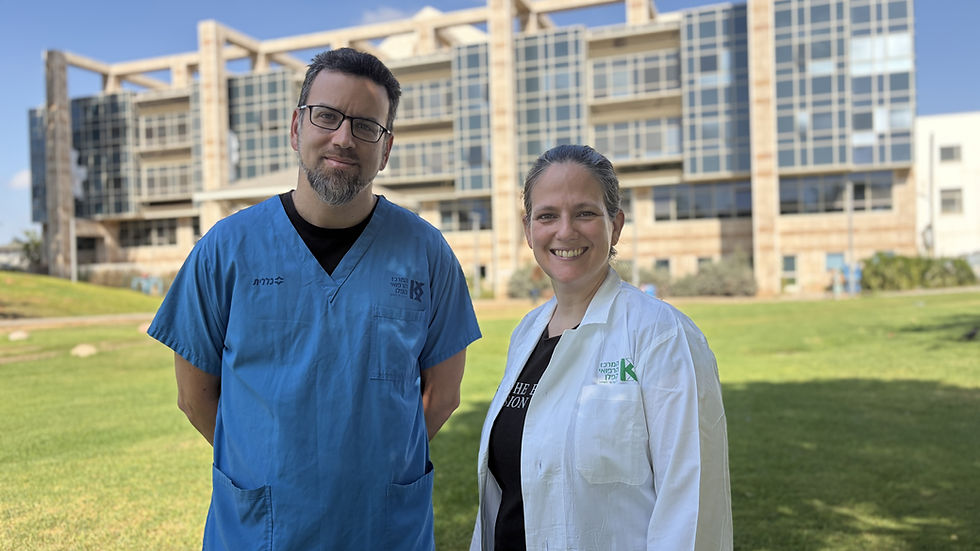
When Dr. Yonatan Lifshitz, a family physician from Bet Shemesh, walked through the doors of the hotel, the emotional response was immediate. Rather than waiting for his patients to return home, he chose to come to them. A simple gesture, yet deeply symbolic. Many of the evacuees have been under his care for years, and several lost everything in the attack.
“I considered going back to Bet Shemesh despite the fear, just to see my doctor and retrieve the medications left in my destroyed home,” said Yaron, 58. “Seeing him here, at the hotel—my trusted doctor—deeply moved me.”
For Dr. Lifshitz, the decision was obvious: “When I learned that my patients had been evacuated, it was clear to me that I had to go to them. Sometimes, beyond the treatment itself, simply seeing a familiar face provides essential stability.”

This human connection lies at the heart of Israel’s community-based healthcare model. “It is built first and foremost on trust between patient and physician,” said Erez Levy, Director of Clalit’s Jerusalem District. “Seeing a doctor join his patients in a hotel is a powerful example of our teams’ commitment. It is in moments like these that the strength of the system is truly tested.”
On the ground, medical teams continue to operate tirelessly—in clinics, in the field, and now in hotels—to ensure not only continuity of care, but also a sense of security for vulnerable populations.
Ronen Nudelman, Deputy CEO of Clalit and Head of its Community Division, also visited the site to support the teams. “I came to thank those who, on the civilian front, continue to stand by patients with exceptional dedication. Our commitment is clear: to be present everywhere, under all circumstances, ensuring that no one is left behind.”
As Bet Shemesh begins to recover, one thing stands out clearly: beyond infrastructure and emergency systems, it is the human capacity to maintain connection, restore stability, and provide care with proximity that makes the real difference today.
In these hotels turned into temporary living spaces, medicine is no longer just a service—it becomes an anchor, a presence, a tangible reminder that even far from home, no one is alone.
Caroline Haïat

Comments