

The Limitations of Israel’s Food Aid Network (Study)
- Caroline Haïat

- 3 days ago
- 3 min read
A new study by the Hebrew University of Jerusalem and Sheba Medical Center has mapped Israel’s extensive food aid network, identifying more than 2,200 NGOs and highlighting its heavy reliance on philanthropy rather than government support. While the system plays a crucial role in addressing food insecurity, the study reveals significant gaps in equity, coordination and oversight. The authors conclude that charity alone cannot substitute for a comprehensive national food security policy.
While philanthropic food aid plays an essential role, it cannot replace a coherent, equitable and accountable public policy.
More than 900 days after the outbreak of the October 7 war, food insecurity remains widespread. In 2024, 27.1% of Israeli households — nearly one million households, including more than one million children — were experiencing food insecurity, according to Israel’s National Insurance Institute.
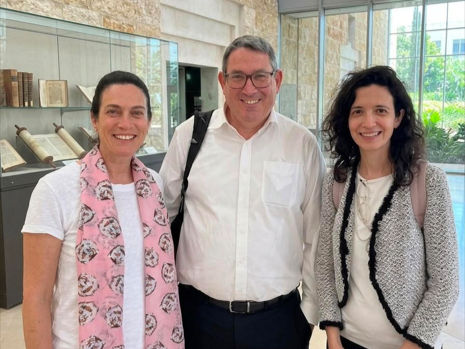
The study, conducted by Moran Accos and Professor Aron M. Troen of the Hebrew University of Jerusalem, in collaboration with Dr. Orly Tamir of Sheba Medical Center, is the first comprehensive national mapping of Israel’s food aid NGO system. Drawing on administrative data and records from major food banks, the researchers identified 2,289 active food aid NGOs, revealing a rapidly expanding but highly fragmented system.
The scale of Israel’s food aid network is striking. Among organizations that reported their figures, annual turnover reached NIS 6.18 billion, supported by more than 28,000 employees and 170,000 volunteers. Yet only 13% of funding comes from the state, meaning that the system relies overwhelmingly on philanthropy.
Most organizations operate locally and distribute food products rather than vouchers, often without standardized reporting systems covering the food provided or its nutritional value. The study also found that, for most NGOs, food aid is a secondary activity, raising questions about how resources are allocated and monitored.
The study highlights significant disparities in the distribution of food aid. Although Arab households are disproportionately affected by food insecurity, only 4% of food aid NGOs operate in Arab communities. Significant regional disparities also emerge: 29% of NGOs operate in the Jerusalem District, compared with just 9% in the North, despite comparable levels of need.
Beyond distribution gaps, the study raises concerns about the system’s effectiveness and efficiency. There is limited systematic data on food quality, the composition of food packages and nutritional standards. At the same time, the fragmentation of the system may reduce the overall impact of substantial financial and human resources. The researchers estimate that even partial improvements in the coordination of the system’s resources could significantly reduce severe food insecurity, highlighting a gap between the scale of the system and the results it achieves.
“From a healthcare perspective, food insecurity is not only a social issue but also a clinical one,” said Dr. Orly Tamir. “When access to adequate food depends on fragmented charitable systems, the consequences extend to population health, inequality and the long-term burden placed on the healthcare system.”
These findings place Israel within a broader international trend in which food aid systems are increasingly functioning as de facto social protection infrastructure in high-income countries. While effective in addressing immediate needs, such systems can also reduce pressure on governments to implement sustainable, rights-based solutions.
Ces résultats inscrivent Israël dans une tendance internationale plus large, où les systèmes d'aide alimentaire fonctionnent de plus en plus comme une infrastructure de protection sociale de facto dans les pays à revenu élevé. Bien qu'efficaces pour répondre aux besoins immédiats, ces systèmes peuvent également réduire la pression exercée sur les gouvernements pour qu'ils mettent en œuvre des solutions durables et fondées sur les droits humains.
“Civil society is doing extraordinary work, but a modern state cannot rely solely on charity to guarantee access to healthy food. The real question is whether aid is distributed equitably, efficiently and transparently, and whether philanthropy complements public responsibility or is being called upon to replace it,” said Professor Aron M. Troen.
The authors call for stronger public leadership, including enhanced oversight, standardized reporting, nutritional standards and better coordination between charitable organizations and government policies.
Caroline Haïat


Comments