

The Psychological Impact of October 7: Two Years of Mental Health Research in Israel
- Caroline Haïat

- 1 minute ago
- 4 min read

In the hours and days following the October 7, 2023 massacre in Israel, the immediate human toll was visible. The psychological consequences that would emerge over the following months and years, however, were far more difficult to grasp. How does a society respond when war, prolonged reserve duty, population displacement, bereavement, economic uncertainty and repeated threats continue to shape everyday life?
A new study published in Frontiers in Psychiatry offers some answers, providing the first synthesis of psychiatric consequences across multiple symptoms during the first two years following October 7.
Drawing on 68 studies, the review provides a comprehensive overview of the rapidly expanding research on mental health in Israel after October 7. Rather than focusing on a single population or psychiatric disorder, the researchers examined symptoms of post-traumatic stress disorder (PTSD), anxiety, depression and substance-related problems. They looked not only at how psychological distress manifested itself, but also at who was most vulnerable, how different forms of exposure were linked to mental health, and what happens when trauma occurs in a context of persistent threat.
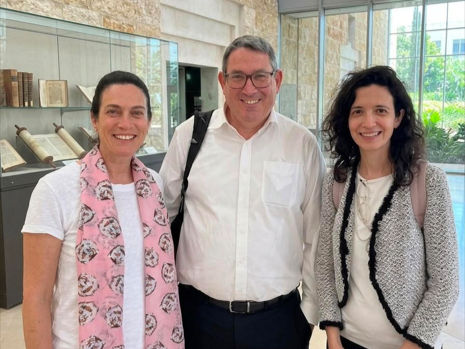
The study was conducted by Dr. Michal Cohen and Prof. Mario Mikulincer of the Israel Center for Addiction and Mental Health (ICAMH) at the Hebrew University of Jerusalem, together with doctoral researcher Maor Daniel Levitin, affiliated with ICAMH/the Hebrew University and Tel Aviv University, in partnership with the Israel Center for Addiction (ICA).
No Single Trauma Narrative in Israel
One of the review's major conclusions is that there is no single psychological response to collective trauma. Across the studies examined, individuals followed different trajectories. For some, symptoms decreased over time, while for others, psychological distress remained high.
What appeared to matter was not simply whether someone had experienced war, but the intensity, continuity and accumulation of exposure, as well as individual, social and structural vulnerabilities.
PTSD was particularly associated with direct, cumulative and role-related exposure. Reservists emerged as one of the most affected populations. Among reservists, certain combat experiences — including close combat, exposure to human remains and physical injuries — were associated with higher levels of PTSD symptoms. More broadly, symptoms remained elevated among some groups exposed to prolonged service or continuous role-related stress.
Anxiety and depression were also widely documented. Although symptoms declined over time among some groups, they remained elevated among people facing persistent threats and ongoing stressors, including reservists, evacuees and bereaved individuals. Direct exposure was only part of the picture. The loss of loved ones, forced displacement, loss of income, prolonged missile attacks, food insecurity and extensive media exposure were also associated with increased anxiety and depressive symptoms.
The study also highlights increased symptoms among several other populations facing specific forms of vulnerability and stress.
At the same time, the research identifies factors that may offer protection. Greater perceived social support, particularly from friends and close relatives, was associated with lower levels of PTSD symptoms.
This distinction has practical implications for Israel: if exposure and vulnerability are unequal, mental health needs are unlikely to be distributed equally either.
From a National Crisis to Targeted Care
The review carries an important practical message for clinicians, policymakers and organizations planning Israel's long-term mental health response: a national crisis does not necessarily mean that everyone requires the same type of care.
Another important finding is that recovery cannot be measured solely by a reduction in symptoms. Anxiety and depression were also associated with lower health-related quality of life and impaired daily functioning.
For a country attempting to rebuild while many sources of stress remain, this changes the questions mental health systems need to ask. It is not enough to determine whether people are less anxious or less depressed. It is also necessary to ask whether they can work, care for their families, maintain relationships, reconnect with their communities and resume meaningful daily activities.
Two Years of Data, and a Story That Is Still Being Written
Most of the available evidence is based on screening tools rather than comprehensive diagnostic assessments, while cross-sectional studies remain common, limiting the ability to establish causal relationships. Some populations likely to carry a significant psychiatric burden — including active-duty military personnel, military families, children and adolescents — were comparatively underrepresented in the available research.
The authors therefore call for sustained longitudinal research extending beyond the acute crisis period. Such studies will be essential to determine whether increased symptoms represent temporary responses to exceptional circumstances or develop into persistent psychiatric disorders requiring longer-term intervention.
The study also suggests that the concept of "consequences" may be insufficient when examining the events of October 7. For many Israelis, the initial trauma was followed by persistent uncertainty, repeated threats, displacement, loss, military service and other cumulative stressors. Across the research reviewed, the persistence and severity of psychiatric symptoms were associated not only with exposure itself, but also with the continuity and accumulation of the factors that followed.
The central lesson is clear: the psychological consequences of October 7 cannot be understood simply by asking whether Israelis were exposed to trauma. It is equally important to understand the intensity of that exposure, its duration, the stressors that accumulated afterward, and the personal and social resources available to individuals as they attempted to recover.
This understanding could prove crucial for Israel as it moves from responding to an immediate mental health emergency toward confronting a longer-term challenge: how to support recovery in a society that has experienced collective trauma and continues to live with its consequences.
Caroline Haïat


Comments