

Women Powering Israel’s Greentech Revolution
- Caroline Haïat

- Dec 21, 2025
- 3 min read

In Israel, environmental innovation is no longer just the domain of laboratories and male-founded start-ups. Over the past few years, a new generation of female leaders has emerged in greentech, taking the helm of companies capable of rethinking how we produce, consume, and protect our resources. Through their career paths, technological choices, and worldviews, they are shaping a future where sustainability and female leadership advance hand in hand. Three prominent figures exemplify this rapidly growing movement.
Among them, Daphna Nissenbaum occupies a unique position. As co-founder of TIPA, she tackled a problem long considered unsolvable: flexible packaging, which represents a significant portion of plastic waste and is notoriously difficult to recycle. After a career in management and a stint in the public sector, she realized that the solution was not merely to reduce plastic use slightly, but to reinvent it radically. Her answer took the form of a compostable material that perfectly mimics the technical properties of plastic while fully decomposing in home or industrial compost.
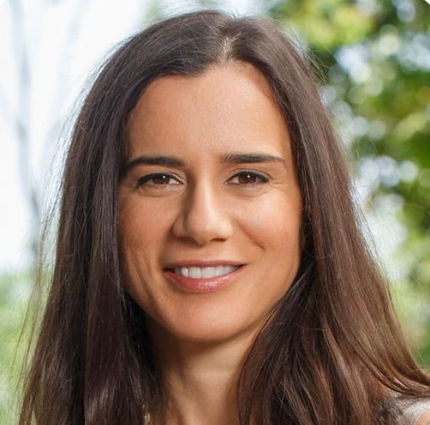
The challenge was bold, as brands, cautious and demanding regarding product preservation, doubted that such a material could truly match conventional films. Yet, Daphna Nissenbaum convinced several international players and positioned TIPA among the global leaders in sustainable packaging. She often emphasizes that the battle is not fought only in laboratories but also through consumer education, as people frequently confuse biodegradable with compostable. For her, a credible ecological transition must be accompanied by collective work on the meaning of words and the cultural context of innovation.
Another key figure in Israeli greentech is Inna Braverman. From Jaffa to pilot installations in the Mediterranean and beyond, her company Eco Wave Power has tapped into a long-overlooked resource: wave energy. Born in Ukraine and a survivor of a domestic accident during the Chernobyl disaster, she has carried a fascination for clean air and unpolluted environments since childhood. As an entrepreneur, she conceived a simple and intelligent system in which floats attached to coastal structures convert wave motion into mechanical energy, which is then transformed into electricity.
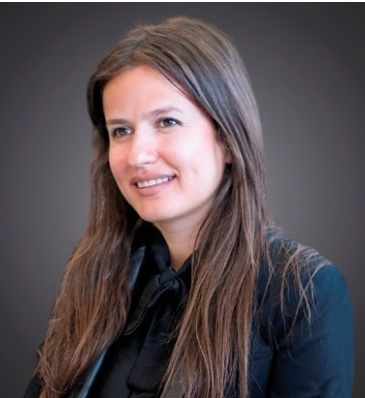
The idea appeals for its ability to integrate without disrupting marine ecosystems while harnessing a readily available energy source close to urban areas. Inna Braverman does not hide the challenges she has faced, from corrosion and violent storms to the reluctance of some investors to support a young woman in a male-dominated field. Nevertheless, she continues with determination, driven by the belief that wave energy can become a vital complement to solar and wind power. Her journey illustrates the tenacity required to push boundaries in the global energy industry.
Finally, Anat Halgoa Solomon has committed herself to a critical area for the region’s future: water optimization in agriculture. She co-founded Saturas in 2013 and led it until last year. The company developed sensor technology capable of directly measuring the hydration status of fruit trees. Unlike traditional systems that monitor soil moisture or climatic conditions, Saturas observes the plant itself and provides precise irrigation recommendations. This approach transforms how farmers manage water resources, significantly reducing water consumption while maintaining or even increasing yields.
The sensors are inserted into the trunk, measure internal pressure, and transmit data to a smart platform. Anat Halgoa Solomon’s innovation does more than improve an existing agricultural practice: it introduces a new way of thinking about the relationship between humans, technology, and nature, in a country where every drop of water counts.
These three leaders share more than ecological ambition. They also share a pragmatic, product-oriented approach. All three turn environmental constraints into industrial and economic opportunities, offering solutions that are exportable and competitive in international markets while strengthening climate resilience. Their success highlights a paradox.
Although Israel remains a global leader in innovation, the proportion of women in executive roles in high-tech is still low. This makes their work even more symbolic, demonstrating that female leadership is not just desirable but essential to accelerating the ecological transition.
Caroline Haïat



Comments